
Supply chain resilience without sacrificing margin
Resilience does not have to mean holding more of everything. Targeted choices protect both continuity and cost.
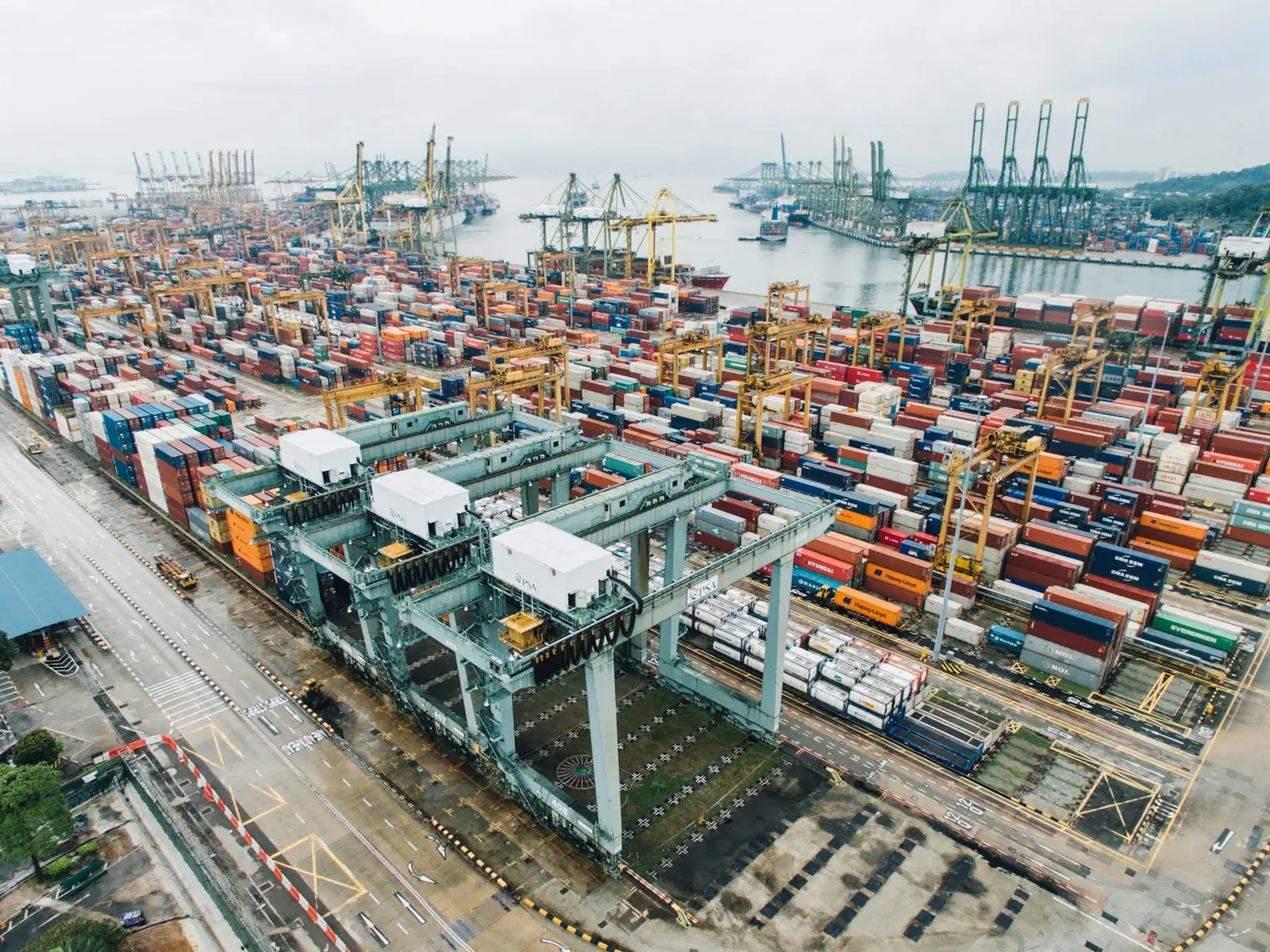
For many years, supply chain strategy was guided by a single objective: lower cost. Production moved to the cheapest locations, suppliers were consolidated, and inventory was cut to the bone. The result was supply chains of remarkable efficiency, and, as recent disruptions have shown, remarkable fragility.
The response in many boardrooms has been to call for resilience. But resilience pursued bluntly can be expensive. Holding more inventory everywhere, qualifying second suppliers for every part and moving production closer to home all carry real costs. The challenge is to buy resilience where it matters and avoid paying for it where it does not.
Know where you are exposed
Most companies know their direct suppliers well and their suppliers' suppliers hardly at all. Yet disruptions often originate several tiers down, in a single plant or a single region that many apparently independent suppliers depend on.
The first step is visibility: mapping the supply chain deeply enough to see the concentrations of risk. That does not require mapping every component. It requires identifying the products that matter most to revenue and margin, and tracing their critical inputs back to the source.
Match the response to the risk
Not every part deserves the same treatment. A useful approach is to assess each critical input on two dimensions: how likely it is to be disrupted, and how damaging a disruption would be. High-impact, hard-to-replace inputs justify significant investment in resilience. Low-impact or easily substituted ones do not.
- 01VisibilityMap critical inputs beyond the first tier to find hidden concentrations of risk.
- 02OptionalityQualify alternative suppliers, sites and routes for the inputs that matter most.
- 03Targeted buffersHold strategic stock where disruption would be costly, and lean stock elsewhere.
- 04GovernanceAssign owners, stress-test regularly and pre-agree responses to disruption.
Spend on resilience in proportion to the value at risk.
Build options, not just buffers
Inventory is the most familiar form of protection, but it is not the only one, and often not the cheapest. Qualifying a second supplier, even at a modest share of volume, creates the option to switch quickly. Designing products so that components can be substituted reduces dependence on any single source. Flexible manufacturing capacity allows production to move between sites. Pre-negotiated logistics alternatives shorten the time to reroute.
These options have a cost, but they also create value in normal times: better negotiating leverage, access to innovation from a broader supplier base, and the ability to respond to shifts in demand as well as supply.
Resilience is not a stockpile. It is the ability to change course quickly when a route is blocked.
Rethink the location question with care
Nearshoring and reshoring have attracted considerable attention. For some products, especially those that are bulky, time-sensitive or strategically sensitive, moving production closer to customers makes sense. For others, the cost penalty outweighs the resilience gain. Decisions should be made product by product, on a total cost basis that includes transport, inventory, tariffs, lead times and the expected cost of disruption, not on headline labour rates alone.
Govern it like any other risk
Resilience fades without ownership. The most prepared organisations assign clear accountability for supply risk, review exposure regularly at executive level, and run stress tests against plausible disruptions. The techniques of scenario planning, especially early signposts and pre-agreed triggers, are well suited to supply chains, where the speed of the response often decides the size of the loss.
Questions for the leadership team
Which ten inputs would halt our most profitable products if they became unavailable? How many tiers back can we trace them? How long would it take to switch to an alternative? And what would a month of disruption cost compared with the cost of protecting against it? The answers will show where resilience is worth buying, and where efficiency should remain the priority.
What would change our view
If targeted resilience measures proved no cheaper than blanket buffers once the full cost of disruption is counted, the trade-off we describe would not hold.
This piece is RavenArc analysis. It draws on established management practice rather than new data, and it cites no specific figures.
RavenArc tests every decision against six questions. See the RavenArc Decision Method.
One considered idea, straight to your inbox.
A short note when we publish something worth a leader’s time. No noise, and you can leave with one click.